
The Ultimate Guide to Maintaining a Clean Home Between Visits
The time between professional cleaning visits is often when a home either stays fresh or gradually slips into clutter. Maintaining a clean home between visits does not require hours of daily chores. A focused 10-to-15-minute daily reset, a weekly high-traffic routine, and immediate spot cleaning are enough to preserve most of that just-cleaned feeling.
This guide explains how to keep your San Diego home tidy between professional cleanings using practical daily habits, the right tools, and a realistic weekly schedule.
Why Between-Visit Maintenance Matters
Professional cleaning removes built-up dust, grime, and stains. Between visits, everyday activity reintroduces dirt in kitchens, bathrooms, entryways, and living areas. Without light maintenance, that buildup returns quickly and makes the next professional visit heavier than it needs to be.
A consistent between-visit routine also supports healthier indoor air. The EPA notes that dust and particulates in high-traffic zones can contribute to poor indoor air quality. Regular light cleaning reduces those particulates and helps your home feel fresher throughout the week.
Finally, a maintained home is easier to host, work, and relax in. You are not constantly catching up on visible messes, and your next professional cleaning can focus on deeper detail work instead of basic surface recovery.
Start with a 10-to-15-Minute Daily Reset
The biggest reason homes fall into chaos between visits is the absence of a daily routine. You do not need an hour of cleaning every day. Consistency matters more than intensity.
A simple daily reset can include:
- Making beds each morning
- Wiping down kitchen counters and the stovetop after cooking
- Spot sweeping or vacuuming the kitchen, entryway, and living room
- Wiping bathroom counters and rinsing sinks after use
- Returning items to their designated places before bed
This routine removes daily visible messes and prevents small tasks from becoming a weekend project.
Take Shoes Off at the Door
Shoes track in dirt, gravel, and debris from sidewalks, yards, and parking areas. Removing shoes at the front door is one of the easiest ways to reduce floor soil between visits.
Keep a shoe rack or bin near the main entrance and encourage household members and guests to use it. Pair this with indoor and outdoor doormats to trap additional dirt before it reaches floors.
Focus on High-Traffic Zones
Some rooms become dirty faster than others. Kitchens, bathrooms, entryways, mudrooms, and main living spaces usually need the most attention between professional cleanings.
Kitchen
Wipe down counters, stovetops, and sink areas after meals. Fresh food splatters and spills are easier to clean immediately than after they dry. A clean kitchen also helps prevent odors and pests.
Bathroom
Use a shower squeegee after each shower to remove excess water from tile and glass. This reduces water spots and slows mildew growth. Wipe bathroom counters and rinse the sink daily.
Entryways and Living Areas
Quickly sweep or vacuum these zones every day or two. Floors collect dust, hair, and outdoor debris faster than most other surfaces. Regular light vacuuming keeps the entire home feeling cleaner.
High-Touch Surfaces
Light switches, doorknobs, cabinet handles, refrigerator pulls, and remote controls are touched daily but often overlooked. Wipe these surfaces once a week with a damp microfiber cloth or a mild cleaning solution to reduce germs and visible buildup.
Clean Up Spills and Stains Immediately
One of the most effective ways to keep your home clean between scheduled appointments is to deal with messes the moment they happen. Spot cleaning right away is almost always faster and easier than scrubbing a dried or set stain later.
Spots worth treating immediately include:
- Food or drink spills on counters, floors, and upholstery
- Grease splatter on the stovetop
- Toothpaste drips and soap rings in bathroom sinks
- Muddy footprints or pet paw prints on floors
- Water rings on wood furniture
Treating these messes quickly saves time over the course of a month, prevents permanent stains, and reduces the chance that a spot will require professional specialty care.
Use the Right Tools and Products for Faster Maintenance
Having the right cleaning supplies within easy reach removes one of the biggest barriers to daily upkeep: friction. When you have to dig through cabinets to find a sponge, you are more likely to skip the task.
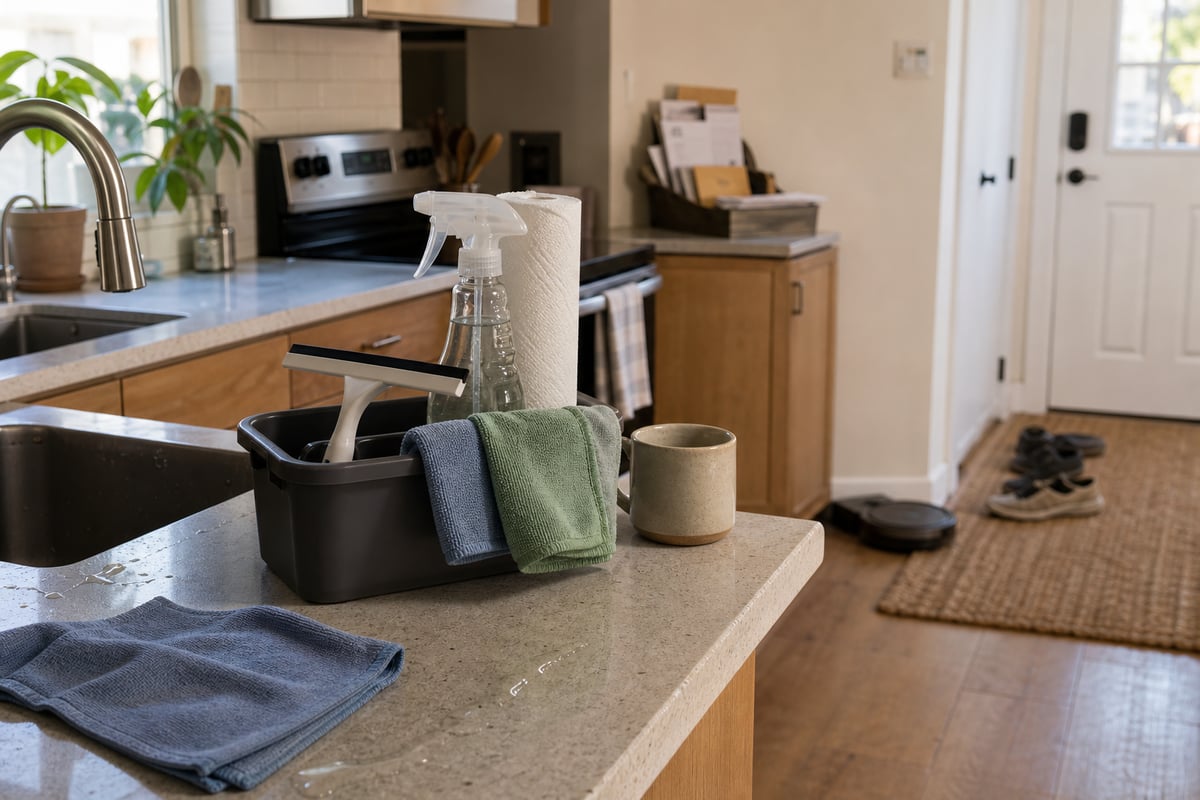
Keep a small cleaning caddy stocked with:
- Microfiber cloths for dusting and wiping
- A shower squeegee
- A handheld vacuum or a broom and dustpan
- A mild all-purpose cleaner
- Glass cleaner for mirrors and bathroom surfaces
- Paper towels or reusable cleaning cloths
Microfiber cloths are especially useful because they attract and hold dust particles on furniture, electronics, and appliances. A robot vacuum is another helpful tool for daily floor upkeep. It will not replace a professional cleaner, but it can maintain floors between visits with minimal effort.
Choose Eco-Friendly Products
For households with children, pets, or sensitivities, non-toxic cleaning products are a safer choice for daily maintenance. They reduce chemical exposure while still handling routine dirt, grease, and spills. The Mopping Duck uses exclusively eco-friendly, non-toxic products for residential cleanings, so the same standard can extend to your at-home upkeep.
Manage Pet Hair and Allergens Proactively
Pet hair and dander accumulate quickly between professional visits. A proactive routine keeps floors, furniture, and air cleaner.
- Vacuum high-traffic rooms and pet resting areas every one to two days
- Use a rubber squeegee or pet hair roller on upholstery and pet beds
- Wash pet bedding regularly
- Replace HVAC filters as recommended by the manufacturer
- Wipe down surfaces where pets shed or sleep
For pet owners in San Diego, a quick daily vacuum and periodic filter replacement help reduce visible hair and airborne allergens. This also keeps your home more comfortable for guests and family members with mild allergies.
Stay Ahead of Laundry, Dishes, and Paper Clutter
Laundry piles and overflowing sinks are two of the fastest ways a home slides into visible disorder. Systems work better than willpower for these repeating chores.
Dishes
Load the dishwasher after each meal and run it when full. If you do not have a dishwasher, wash dishes immediately after eating and set them to dry. This prevents sink overflow and keeps kitchen counters clear.
Laundry
Choose a consistent laundry day or split loads across the week. The goal is to avoid a weekly laundry mountain. Clean linens and folded clothing reduce visible clutter in bedrooms and living areas.
Paper Clutter
Mail, flyers, school paperwork, and receipts build up quickly. Keep a dedicated paper bin near the entryway or kitchen. Once a week, sort the bin, file what you need, and recycle the rest. This one habit prevents countertop and table clutter.
How The Mopping Duck Helps San Diego Homes Stay Clean Between Visits
Between-visit maintenance works best when paired with a professional recurring cleaning schedule. Daily resets and weekly spot cleaning keep surfaces manageable, while a professional service handles detailed work like floor care, appliance cleaning, and bathroom scrubbing.
The Mopping Duck provides recurring residential cleaning in San Diego with weekly, biweekly, and monthly options. Every clean uses eco-friendly, non-toxic products and a client-specific checklist, so the work matches your home instead of following a generic template.
All team members are fully vetted and insured, and the company maintains a 5.0-star average rating across 100+ reviews. When you combine light daily maintenance with professional visits, your home stays consistently clean without becoming a second job.
If you want a cleaning plan matched to your household, request a personalized quote or contact The Mopping Duck.
Frequently Asked Questions
How often should I clean between professional visits?
A 10-to-15-minute daily reset is usually enough for most kitchens, bathrooms, and high-traffic living areas. Add a weekly reset for floors, high-touch surfaces, laundry, and paper clutter. The exact frequency depends on household size, pets, and how often professional cleanings are scheduled.
What should I do daily to keep my home clean?
Make beds, wipe kitchen counters and the stovetop, spot sweep or vacuum high-traffic floors, rinse bathroom sinks, and return items to their designated places before bed. These small tasks take less than 15 minutes and prevent visible buildup between professional visits.
How do I keep pet hair under control between visits?
Vacuum high-traffic rooms and pet resting areas every one to two days. Use a rubber squeegee or pet hair roller on upholstery and pet beds, wash pet bedding regularly, and replace HVAC filters as recommended. These steps reduce visible hair and airborne dander.
Do I need special cleaning products for daily upkeep?
No. A mild all-purpose cleaner, microfiber cloths, and a shower squeegee are usually enough. If your household includes children, pets, or anyone with sensitivities, choose non-toxic or eco-friendly products for safer daily use.
Should I book weekly, biweekly, or monthly cleanings?
Weekly cleanings work well for busy households with children or pets. Biweekly cleanings are a common balance for many San Diego homes. Monthly cleanings often require more consistent between-visit maintenance. The right schedule depends on your home size, household activity, and personal preferences.
How can I make my next professional cleaning more effective?
Keep up with daily resets, immediate spill cleanup, and weekly high-touch surface wiping. This prevents heavy buildup and allows your professional cleaner to focus on detailed work such as baseboards, appliance interiors, grout, and other areas that need deeper attention.
If your San Diego home needs reliable professional support between your own light maintenance, The Mopping Duck offers customized recurring cleanings with non-toxic products and a checklist built around your home. Get a quote to schedule your next visit.