
Sustainable Home Care: Simple Swaps That Make a Difference
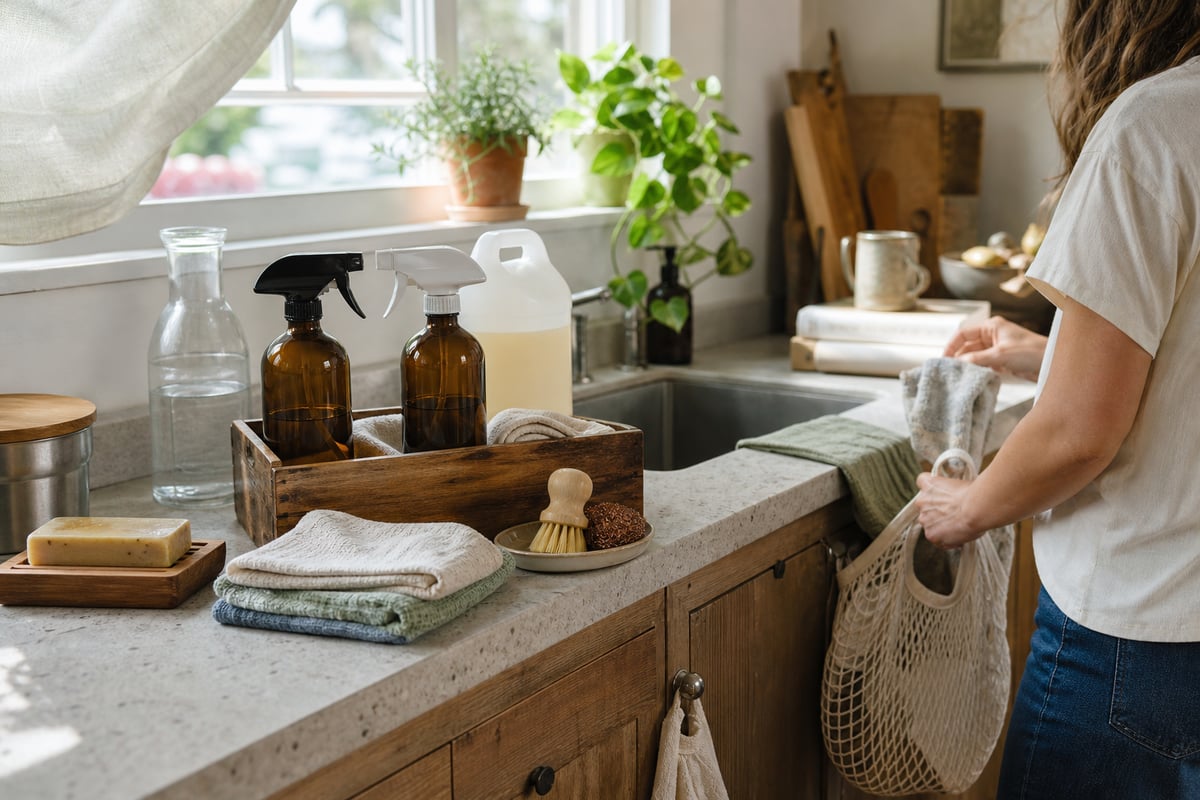
Sustainable home care is built on simple swaps, not an all-or-nothing lifestyle change. Focus first on three categories: the cleaners you use, the disposable products you throw away, and the amount of water and energy involved in daily routines. Replacing paper towels with washable cloths, switching to non-toxic cleaners, and choosing refillable soap over single-use plastic bottles are practical changes that lower chemical exposure and household waste.
Why Sustainable Swaps Matter in Home Care
Many conventional cleaning products contain synthetic fragrances, bleach, ammonia, and other ingredients that can irritate eyes, skin, and airways. These products also create plastic packaging waste, much of which ends up in landfills or waterways.
The same pattern appears with paper products. Producing one paper plate requires about eight gallons of water. A modern energy-efficient dishwasher uses between three and five gallons per load, which means reusable dishes create far less water impact over time than disposable alternatives.
Small changes feel modest, but they compound across weeks of cleaning, cooking, and laundry. The goal is not a zero-waste home overnight. It is a series of low-friction decisions that become the new standard.
Swap Conventional Cleaners for Non-Toxic Alternatives
The easiest place to start is under the kitchen and bathroom sink.
- Replace bleach-based sprays with hydrogen peroxide cleaners or oxygen-based powders for surfaces and grout.
- Replace heavily fragranced all-purpose sprays with unscented or naturally scented plant-based formulas.
- Choose concentrated refills instead of new plastic bottles for every purchase.
- Look for products that list all ingredients clearly on the label.
- Avoid aerosol sprays when pump or trigger sprays can do the same job.
Non-toxic does not mean less effective. Many mineral-based and plant-based cleaners remove soap scum, grease, and daily grime without the harsh fumes associated with conventional products. The result is usually a gentler smell and a safer environment for children and pets.
For San Diego homes where windows stay open through much of the year, reducing synthetic fragrance and aerosol use also reduces indoor air buildup.
Replace Single-Use Cleaning Tools
Disposable tools create hidden waste in the home care routine.
| Common Item | Sustainable Alternative | Primary Benefit |
|---|---|---|
| Paper towels | Cotton cloths or microfiber towels | Reusable and washable |
| Disinfecting wipes | Washable cleaning cloths with non-toxic spray | Less plastic and chemical residue |
| Plastic scrub sponges | Bamboo scrubbers, copper scrubbers, or loofahs | Compostable or recyclable at end of life |
| Disposable mop pads | Machine-washable mop pads | Reduced landfill waste |
A common concern with reusable cloths is remembering to wash them. Keep a small mesh bag in the laundry room or place cloths directly into the washing machine after use. They can be included in the next regular load.
When choosing tools, prioritize durability. A well-made cotton cloth or wooden scrub brush may cost more upfront but outlasts multiple packages of disposable alternatives.
Reduce Water and Energy Use at Home
Sustainability includes how much water and energy a home consumes.
- Run full loads of laundry and dishes rather than multiple small loads.
- Wash most clothing in cold water to reduce energy demand.
- Use an energy-efficient dishwasher instead of hand-washing when possible, since modern machines often use less water per load.
- Air-dry clothes, dish towels, and cleaning cloths when weather allows.
- Switch to LED bulbs in frequently used rooms to lower electricity consumption.
These changes are especially relevant in Southern California, where water conservation supports local water supply resilience. A cleaning routine that uses reusable cloths and full loads reduces both purchased waste and water demand.
Rethink Bathroom and Storage Items
Bathroom and kitchen swaps reduce waste beyond the cleaning cabinet.
- Replace conventional toilet paper with recycled-content or tree-free options. One roll of conventional toilet paper requires about 37 gallons of water to produce, and Americans use roughly 8 million tons of toilet paper each year. If every U.S. household switched one roll per year to 100 percent recycled content, it could save an estimated 423,900 trees.
- Use bar soap or refillable liquid soap instead of single-use plastic soap bottles.
- Replace plastic toothbrushes with bamboo toothbrushes to reduce persistent plastic waste.
- Choose reusable metal or glass water bottles instead of single-use plastic bottles.
- Choose glass or stainless steel food storage containers instead of plastic containers that become brittle and are replaced often.
- Replace plastic wrap with beeswax wraps or silicone lids for bowls and produce.
- Use cloth napkins instead of paper napkins during meals.
These swaps do not require an expensive overhaul. Start with the item that causes the most visible waste in your home, such as paper towels, bottled cleaner, or plastic storage containers.
How a Green Cleaning Service Supports the Shift
A sustainable home care routine is easier to maintain when professional cleaning uses the same standards. If you hire a residential cleaning service, ask what products and tools the company uses by default.
The Mopping Duck uses eco-friendly, non-toxic products exclusively in San Diego homes. Teams are vetted, insured, and guided by client-specific checklists, so consistency and safety remain the baseline. For households that want to reduce chemical exposure without researching every product label, a recurring cleaning service can handle that decision across each visit.
Request a quote to compare service options, or contact The Mopping Duck to ask about the products used in your home.
Frequently Asked Questions
Are eco-friendly cleaning products as effective as conventional cleaners?
Many non-toxic and plant-based cleaners use mineral-based or oxygen-based ingredients that remove grease, soap scum, and daily buildup effectively. Performance depends on dwell time and mechanical cleaning, not harsh fumes.
What is the easiest sustainable swap to start with?
Replacing paper towels with washable cotton cloths is one of the lowest-friction changes. The cloths can be washed with regular laundry, and the switch immediately reduces plastic packaging and paper waste.
Do I need to make my own cleaning products to clean sustainably?
No. Homemade cleaners can work for some surfaces, but commercially available non-toxic products and concentrated refills provide convenience and tested formulas without the harsh ingredients found in many conventional cleaners.
How does hiring a cleaning service affect sustainability?
It can improve consistency if the service uses non-toxic products and washable tools. Professional teams may also use fewer disposable supplies than a household testing several different products. Ask about product standards before booking.
Can sustainable home care reduce indoor allergens?
Reducing synthetic fragrances, aerosol sprays, and harsh chemicals may help lower indoor irritants. For allergy-specific concerns, choose fragrance-free or naturally scented products and improve ventilation during cleaning.
Start With Two or Three Changes
Sustainable home care is most successful when swaps fit your current routine. Choose two or three replacements in the first month, such as a non-toxic all-purpose cleaner, reusable cleaning cloths, and recycled-content toilet paper. Once those become automatic, add another change.
If you want professional support for an eco-friendly baseline in your San Diego home, request a cleaning quote from The Mopping Duck or ask a product question before your first visit.