
Pet-Safe Cleaning: What to Use and Avoid
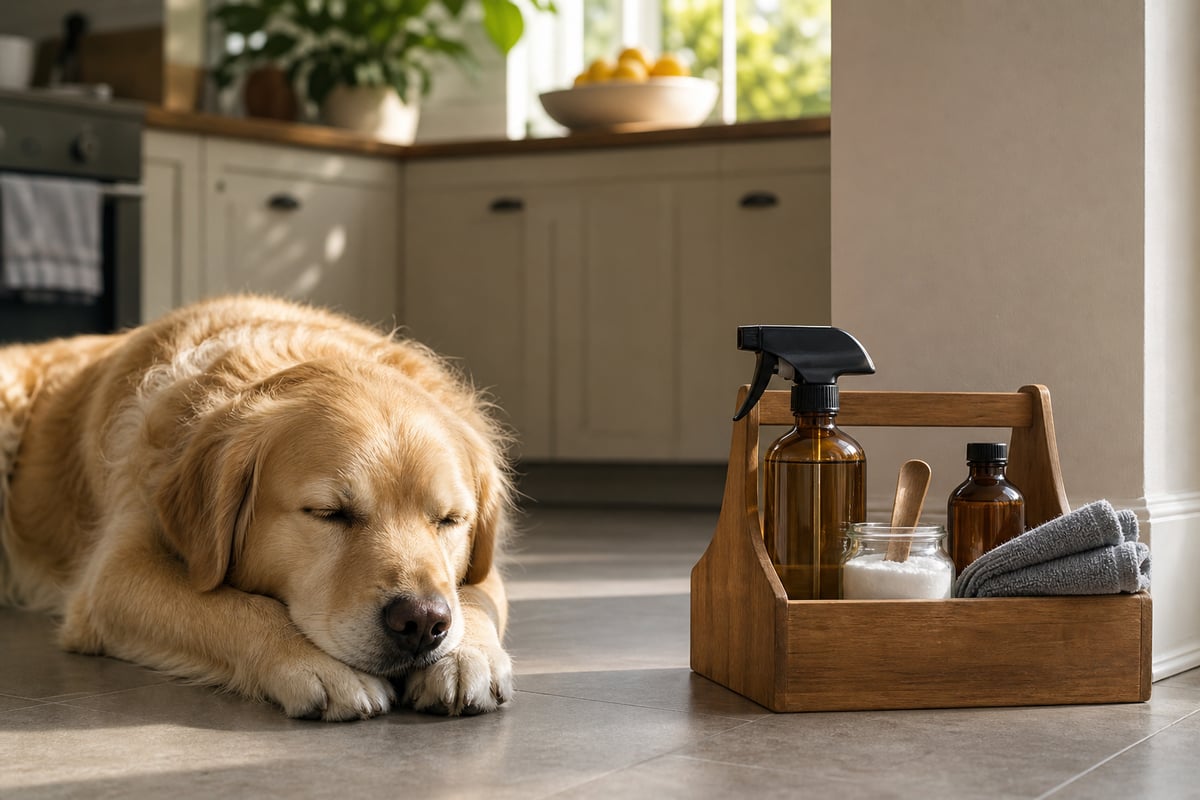
The safest approach to pet-safe cleaning is to read complete ingredient lists and avoid products that contain ammonia, bleach, phenols, quaternary ammonium compounds, glycol ethers, formaldehyde, and undisclosed fragrance. Pets spend much of their time near floors and baseboards, groom their paws after walking on cleaned surfaces, and have more sensitive respiratory systems than people. That makes cleaning product residues and fumes a daily consideration, not an occasional one.
You will still see many bottles labeled "pet-safe." The phrase has no regulatory definition, so it is not a reliable safety claim. A product can carry that label while still containing quaternary ammonium compounds or hidden fragrance chemicals. Ingredient transparency is more important than marketing language.
Ingredients to Avoid in Pet Households
Before purchasing a cleaner, review the full ingredient list. If a product does not list all ingredients, treat the missing information as a reason to choose another option. The following ingredients are among the most commonly cited hazards for dogs, cats, birds, and small mammals.
- Ammonia: Ammonia is a strong respiratory irritant. Because its odor resembles urine, it may also encourage pets to mark or avoid cleaned areas. Never mix ammonia with bleach, which creates chloramine gas, a toxic vapor that settles low to the floor where animals breathe.
- Bleach (sodium hypochlorite): Bleach is corrosive and can cause respiratory distress, drooling, vomiting, diarrhea, and tissue burns if ingested or inhaled in concentrated amounts. It releases chlorine gas, especially when combined with acids or ammonia. Keep pets out of the room until all fumes are gone.
- Phenols: Phenols and phenolic compounds appear in some disinfectant cleaners, including certain products with "-sol" in the name. They are particularly dangerous for cats, which have limited ability to metabolize certain chemicals.
- Quaternary ammonium compounds (quats): Look for benzalkonium chloride, alkyl dimethyl benzyl ammonium saccharinate, or any ingredient containing "quaternary ammonium." These disinfectants are common in antibacterial cleaners and can be harmful to pets if residues are licked or inhaled.
- Glycol ethers: Ingredients such as butoxyethanol are solvents used in glass and surface cleaners to reduce streaking. Chronic exposure has been linked to liver, nerve, digestive, and kidney damage.
- Formaldehyde and formaldehyde releasers: Some products list formaldehyde directly, while others contain ingredients such as DMDM hydantoin, diazolidinyl urea, imidazolidinyl urea, or quaternium-15, which can release formaldehyde over time. These are respiratory and skin irritants.
- Undisclosed fragrance and phthalates: The terms "fragrance," "parfum," or "fragrance blend" can hide dozens of chemicals, including phthalates. For pet safety, artificial fragrance is a strong reason to skip a product.
- Other hazardous ingredients to check for: Isopropyl alcohol, triclosan, sodium hydroxide, and perchloroethylene (PERC) also appear in some household cleaners and can pose risks to pets through direct contact, inhalation, or ingestion.
Ingredients and Products That Are Safer to Use
The following household staples and product types are generally considered safer when used correctly. Even these should be used with ventilation, and pets should stay away from wet surfaces until fully dry.
- White vinegar or apple cider vinegar: Vinegar contains acetic acid, which can kill some bacteria and help break down mineral deposits and soap scum. The sharp smell fades as it dries.
- Baking soda: Sodium bicarbonate neutralizes odors and acts as a mild abrasive for sinks, counters, and tubs. Combined with vinegar, it can help cut grease and clear slow drains.
- Castile soap: A plant-based soap made without animal fats or synthetic ingredients. Diluted castile soap can be used for general surface cleaning and is biodegradable.
- Lemon juice: Mildly acidic, lemon juice can help remove hard water stains, coffee and tea stains, and soap scum. Avoid using concentrated citrus cleaners around cats, and do not rely on lemon juice as a disinfectant.
- Hydrogen peroxide: This oxygen-based bleach can remove stains, kill mold, and break down urine odors. Test a hidden area first because it can lighten some fabrics and carpets. Never mix hydrogen peroxide with vinegar, because the combination can create peracetic acid.
- Ingredient-transparent commercial products: Choose products that list all ingredients and explicitly state they are free from ammonia, bleach, phenols, quats, and synthetic fragrances. Avoid vague labels such as "proprietary blend" or "natural disinfectant formula."
How to Read a Pet-Safe Cleaning Label
A complete ingredient list is the first requirement. Safer formulations list every ingredient. If you see only "fragrance," "proprietary blend," or "natural formula," you cannot evaluate safety.
Look for examples of what is not included. Products designed with pet safety in mind often state "no ammonia," "no bleach," "no phenols," or "no synthetic fragrances." This type of label does not guarantee safety for every animal, but it shows that the manufacturer considered pet-related risks.
Check for essential oils by specific name, not as a blend. Some essential oils may be safe for dogs but not cats. Cats are especially sensitive because they lack certain liver enzymes needed to process many aromatic compounds. Birds, rabbits, guinea pigs, and other small animals also have more delicate respiratory systems. If a label says "essential oil blend" without naming the oils, avoid using it in pet areas.
Room-by-Room Safety Practices
Pet exposure risks vary by room. Consistent rules in each space reduce the chance of accidental ingestion or inhalation.
- Floors and baseboards: Use non-toxic or ingredient-transparent floor cleaners. Rinse if recommended, and keep pets off the surface until dry. Pets often lie on hard floors and lick their paws.
- Carpet and upholstery: For odor refreshers, use baking soda or a pet-safe powder. Vacuum thoroughly and keep pets away during the application and drying time. Test hydrogen peroxide solutions on a hidden area before treating stains.
- Kitchen: Clean grease with baking soda, castile soap, or diluted vinegar. Avoid oven cleaners containing sodium hydroxide unless the room is fully ventilated and pets are kept out for the full recommended time.
- Bathroom: If a pet drinks from the toilet, avoid chemical toilet bowl cleaners and bleach pucks. Use vinegar, citric acid, or another non-toxic option.
- Litter boxes and accident areas: Never use ammonia on urine. The smell can encourage marking or avoidance. Clean with an enzyme-based or hydrogen peroxide solution appropriate for the surface, and blot rather than rub.
- Air quality: Open windows when cleaning. Keep pets out of the room until the surfaces are dry and the smell has dissipated. Change clothes and wash hands after using stronger products to reduce transfer to fur.
Professional Non-Toxic Cleaning for Pet Households
If you want pet-safe results without evaluating every product yourself, a professional service that uses non-toxic products can simplify the process. The Mopping Duck provides residential cleaning in San Diego and uses eco-friendly, non-toxic products as a core operating standard. The company also uses vetted, insured team members and client-specific checklists, which help create consistent results in pet-friendly homes.
Before booking, tell the cleaning team about your pets, specific problem areas, and any product sensitivities. That allows the service to tailor its approach and avoid unnecessary fragrance or chemical exposure.
For pet households in San Diego, request a customized cleaning quote and note your pet concerns in the booking request. You can also contact The Mopping Duck with questions about product ingredients or scheduling.
Frequently Asked Questions
Are vinegar and baking soda safe for pets?
Vinegar and baking soda are generally safe when used correctly and rinsed or dried before pets return to the area. Vinegar has a strong odor that fades as it dries, and baking soda is a mild abrasive and odor neutralizer. Keep pets away during cleaning to prevent them from licking wet solutions.
Can I use bleach if I keep my pets out of the room?
Bleach can be used in a pet household only with extreme caution. Keep pets out until surfaces are completely dry and all fumes are gone. Never mix bleach with ammonia or acids, including some vinegar cleaners. If a pet has a respiratory condition, consider a non-toxic alternative.
Which essential oils are toxic to cats?
Many essential oils are dangerous for cats, including tea tree, eucalyptus, peppermint, citrus, cinnamon, and lavender. Cats lack certain liver enzymes needed to metabolize these compounds. Avoid diffusing or cleaning with essential oil blends in homes with cats, and keep them out of rooms where any essential oil product is used.
How do I clean pet urine without ammonia?
Never use ammonia on urine stains because the smell can encourage pets to mark the same area. Blot up as much liquid as possible, then use an enzyme cleaner, diluted hydrogen peroxide, or a baking soda and castile soap solution. Test hydrogen peroxide on a hidden area first, and keep pets away until the area is dry.
What should I look for on a cleaning product label?
Choose a product with a complete ingredient list. Avoid labels that use vague terms like "fragrance," "parfum," "proprietary blend," or "natural formula." Look for products that explicitly state they are free from ammonia, bleach, phenols, quaternary ammonium compounds, and synthetic fragrances.
Is professional non-toxic cleaning available in San Diego?
Yes. The Mopping Duck provides residential cleaning in San Diego using eco-friendly, non-toxic products. You can specify pet-specific needs when requesting a quote, and the cleaning team can tailor the service to your home and pet concerns.
Final Recommendation
Start by removing the highest-risk products from your cleaning routine: ammonia, bleach, phenol-based cleaners, and anything with undisclosed fragrance. Replace them with ingredient-transparent products or simple alternatives such as vinegar, baking soda, and castile soap. Always ventilate the room, keep pets away until surfaces are dry, and never mix ammonia with bleach or hydrogen peroxide with vinegar.
For a lower-effort way to maintain a pet-safe home, consider a professional service that already uses non-toxic products. Request a residential cleaning quote from The Mopping Duck for your San Diego home and include your pet details so the team can plan accordingly.