

How to Keep High-Traffic Areas Cleaner Longer
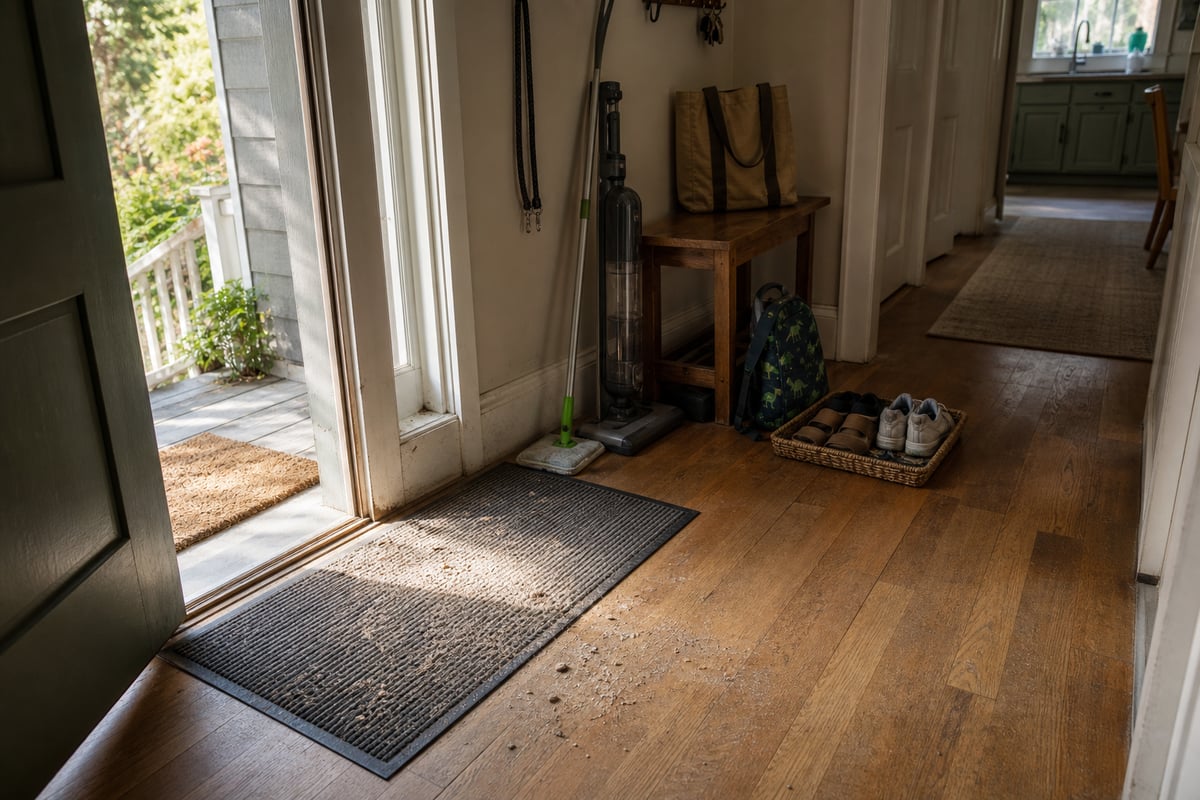
High-traffic areas stay cleaner longer when you block soil at entry points, remove it before it gets ground in, and pair daily maintenance with periodic deep cleaning. In homes, that means doormats, a no-shoes policy, frequent vacuuming, and fast spill response. In commercial buildings, it means walk-off matting, scheduled daytime upkeep, restroom checks, and consistent floor care.
Why High-Traffic Areas Get Dirty Faster
High-traffic areas get dirty faster because foot traffic grinds fine soil, oils, and moisture into surfaces before routine cleaning can remove them. Entryways, hallways, kitchen paths, bathroom entries, and main corridors receive more steps, more spills, and more outdoor debris than other spaces.
The damage is not only visible. Tiny abrasive particles act like sandpaper on carpet fibers and hard floor finishes. Oils and food residue attract additional soil. Moisture can carry contaminants into grout, carpet backing, and porous stone. The longer those materials sit, the more aggressive the cleaning required and the greater the risk of permanent wear.
In San Diego, beach sand and dry outdoor dust often enter homes and commercial lobbies. Without an entry barrier, those particles spread quickly into adjacent rooms and restrooms.
Prevention Is the Most Effective Step
The most effective way to keep high-traffic areas cleaner longer is to stop soil at entry points and remove it before it spreads.
- Use outdoor and indoor walk-off mats at every exterior door. In commercial buildings, choose commercial entrance matting long enough to capture several steps.
- In homes, create a no-shoes area near the entry with a bench or shoe tray.
- Keep a vacuum, broom, or microfiber dust mop near the main entry so quick cleanups happen immediately.
- Address spills as soon as they occur. Blot carpet spills instead of rubbing, and dry hard floors promptly.
- Empty trash containers before they become full or overflow. Overflowing trash is a major source of debris in kitchens, breakrooms, and public areas.
Residential High-Traffic Area Cleaning Plan
In homes, the best results come from daily small actions in entryways, kitchens, bathrooms, and hallways rather than waiting for weekly deep cleaning.
Entryways, Hallways, and Living Areas
These spaces collect dust, pet hair, outdoor soil, and body oils. If the household has pets or children, vacuum carpeted hallways and area rugs daily or every other day with a HEPA-filter vacuum. Vacuum along edges and under furniture where dirt accumulates. For hard floors, use a microfiber dust mop or dry mop daily and damp mop weekly with a pH-neutral cleaner.
If carpet odor is an issue, sprinkle a thin layer of dry baking soda over the affected area. Let it sit for 15 minutes, then vacuum thoroughly. Do not rub a wet baking soda paste into carpet, because residue can attract more soil.
Rotate area rugs and move furniture slightly every few months. This prevents permanent depressions and discolored traffic lanes.
Kitchens
The kitchen path between the sink, stove, and refrigerator is one of the most heavily used areas in a home.
- Wipe countertops daily with a non-toxic cleaner, especially around the sink and cooktop.
- Sweep the floor daily to remove crumbs before they spread.
- Mop weekly with a cleaner matched to the floor type.
- Clean the exterior of appliances regularly to remove fingerprints and grease.
- Use liners in trash bins and empty them before they are completely full.
Bathrooms
Bathroom entries and sink areas see moisture, soap residue, and daily use. Wipe the sink and faucet after morning use, squeegee or dry shower walls when possible, and clean the toilet weekly or more often if the home has multiple occupants. Keep a small caddy with non-toxic cleaner and microfiber cloths in the bathroom so touch-ups take less than a minute.
Commercial High-Traffic Area Cleaning Plan
Commercial high-traffic areas stay cleaner longer when daytime maintenance is treated as seriously as after-hours cleaning. Facility managers should plan for visible touch-ups during operating hours, not only after closing.
Entrances, Lobbies, and Corridors
Place walk-off matting outside and inside every main entrance. Mats should remain flat, dry, and free of accumulated debris. Sweep or vacuum mats at least daily and deep clean them on a regular schedule.
For hard floors, use daily dust mopping or auto-scrubbing in main corridors. Spot mop spills immediately to reduce slip risk and prevent staining. Schedule periodic scrub and recoat for tile, stone, or polished concrete based on traffic volume.
Restrooms
Restrooms near entrances, food courts, and high-use areas need more frequent checks than remote restrooms. Check soap, paper towels, and toilet paper frequently during peak traffic.
- Empty trash before bins become full or overflow.
- Wipe high-touch surfaces including door handles, stall latches, and sink controls.
- Use wall-mounted air fresheners or odor control systems in restrooms and adjacent hallways. A clean scent supports the perception of hygiene, but it should not replace actual cleaning.
- If possible, use high-capacity or connected dispensers to reduce runouts and service interruptions.
Floors and Spills
Entry floors and food service areas need fast spill response. Keep a wet floor sign and cleaning cart accessible during operating hours. For carpeted commercial spaces, vacuum high-traffic lanes daily and schedule professional extraction more frequently than lower-traffic areas.
Cleaning Frequency: Daily, Weekly, and Periodic Tasks
A simple frequency plan helps prevent buildup without overloading the routine. Use this table as a starting point and adjust based on the number of occupants or visitors.
| Space | Daily or High-Frequency | Weekly | Periodic |
|---|---|---|---|
| Residential entryways and hallways | Vacuum rugs, sweep hard floors, remove shoes, spot clean spills | Damp mop hard surfaces, launder entry mats, vacuum edges | Deep clean carpets and area rugs every 3 to 6 months |
| Residential kitchen | Wipe counters, sweep floor, empty trash | Mop floor, clean appliance exteriors | Deep clean oven, refrigerator, and cabinet fronts |
| Residential bathroom | Wipe sink and faucet, dry shower walls | Clean toilet, scrub shower, launder bath mats | Deep clean grout and shower doors |
| Commercial entrances and corridors | Sweep or auto-scrub, spot mop spills, check mats | Deep clean walk-off mats, dust high surfaces | Scrub and recoat hard floors, extract carpets |
| Commercial restrooms | Check supplies frequently, wipe high-touch surfaces, empty trash | Detailed fixture and floor cleaning | Deep grout cleaning, drain and odor control |
When to Bring in Professional Cleaning Support
Professional maintenance helps when daily prevention is not enough to stop embedded soil, odor, or visible wear. A high-quality provider can handle the periodic deep cleaning that prevents high-traffic areas from requiring expensive repairs.
For residential clients, recurring cleaning reduces how often deep cleaning is needed. A professional team can maintain entryways, kitchens, bathrooms, and floors on a weekly, bi-weekly, or monthly schedule. For commercial facilities, scheduled maintenance provides consistent staffing, quality control, and the capacity to handle large or multi-location properties.
The Mopping Duck provides residential cleaning services and commercial facility maintenance throughout San Diego. The company uses eco-friendly, non-toxic products, and team members are vetted and insured. The company uses client-specific checklists so high-traffic areas do not get overlooked between visits.
Frequently Asked Questions
How often should I vacuum high-traffic carpet?
Vacuum high-traffic carpet daily or every other day if the home has pets, children, or high foot traffic. Weekly vacuuming is a minimum for less-used areas. More frequent vacuuming removes abrasive particles before they settle deeper into carpet fibers, which keeps the carpet cleaner longer and extends its life.
Do no-shoes policies actually help keep floors cleaner?
Yes. Shoes track in outdoor soil, oils, moisture, and fine particles that grind into carpet and scratch hard floors. A no-shoes policy combined with interior and exterior mats significantly reduces how much debris reaches high-traffic areas. It works well in homes and can be encouraged in some commercial spaces through signage and shoe covers for sensitive areas.
How often should high-traffic carpets be professionally cleaned?
Most residential carpets in high-traffic areas benefit from professional deep cleaning every 3 to 6 months. Commercial carpets may need more frequent extraction depending on foot traffic and soiling. Periodic professional cleaning removes embedded soil that routine vacuuming cannot reach and helps prevent permanent matting and discoloration.
What is the best way to keep commercial restrooms cleaner longer?
Combine frequent daytime checks, high-capacity or connected dispensers, adequate trash capacity, and quick spill response. Restrooms near entrances or food courts need more frequent restocking and cleaning than lower-traffic restrooms. Wiping high-touch surfaces several times per day and using odor control systems also keeps restrooms feeling cleaner longer.
Are eco-friendly cleaning products effective on high-traffic dirt?
Yes. Eco-friendly, non-toxic cleaners can remove daily soil, grease, and buildup when they are matched to the surface and used consistently. Professional services using these products can provide effective maintenance without leaving harsh chemical residue, which is especially important in homes with children, pets, or sensitive occupants.
Keep High-Traffic Areas Cleaner Longer
The most sustainable approach is to combine daily prevention, material-specific routines, and professional deep cleaning. High-traffic areas will still need more attention than other spaces, but the effort becomes more predictable and less disruptive.
If you want a customized maintenance plan for your home or facility, request a customized cleaning quote or contact our San Diego team to discuss your property. The Mopping Duck offers eco-friendly cleaning support with vetted, insured team members for residential and commercial clients throughout San Diego.