
How Professional Cleaning Improves Indoor Air Quality
Professional cleaning improves indoor air quality by removing settled dust, allergens, mold spores, and chemical residues before they become airborne. It also reduces reliance on harsh cleaning products, especially when a provider uses low-toxicity or eco-friendly solutions. In both homes and workplaces, cleaner surfaces, soft furnishings, and accessible ventilation points support healthier indoor air.
Why Indoor Air Quality Matters
Indoor air can contain higher concentrations of some pollutants than outdoor air because many buildings are designed to seal in conditioned air. Dust mites, pet dander, pollen, mold spores, and chemical residues accumulate on surfaces and in soft materials. When people walk, sit, or use HVAC systems, those particles can become airborne and enter breathing zones.
Poor indoor air quality contributes to:
- Allergy and asthma symptoms
- Headaches and fatigue
- Reduced concentration
- Respiratory irritation
- Lower workplace productivity
Improving indoor air quality is not only about adding an air purifier. Routine professional cleaning addresses the sources of many airborne pollutants.
How Professional Cleaning Reduces Common Indoor Air Pollutants
Professional cleaning targets the places where pollutants collect and the conditions that allow them to spread.
Dust and Allergen Removal
Dust settles on floors, furniture, shelves, vents, and electronics. Standard cleaning often moves dust around. Professional cleaning uses methods like HEPA-filtered vacuums and microfiber cloths to capture fine particles instead of pushing them back into the air.
High-traffic areas, carpets, area rugs, and upholstered furniture trap the most allergens. Regular deep cleaning removes these accumulations and prevents them from recirculating.
Mold and Moisture Control
Mold grows in damp, poorly ventilated spaces such as bathrooms, kitchens, laundry rooms, and areas near HVAC condensate. Professional cleaners pay attention to moisture-prone surfaces and can recommend dehumidification, leak repair, or improved ventilation when signs of mold or mildew appear.
Removing visible mold and drying surfaces properly reduces spores that would otherwise enter the air. Consistent cleaning also prevents mold from establishing colonies inside grout lines, under sinks, and around window frames.
Chemical Pollutant Management
Many common cleaning products release volatile organic compounds, or VOCs, into the air. Professional cleaning providers that use eco-friendly, non-toxic products remove soil without adding chemical pollutants to the indoor environment.
Proper ventilation during and after cleaning also helps dissipate any remaining product odor. In commercial settings, professional cleaning can reduce surface dust and residue around printers, adhesives, and other office equipment.
Ventilation and HVAC Surface Cleaning
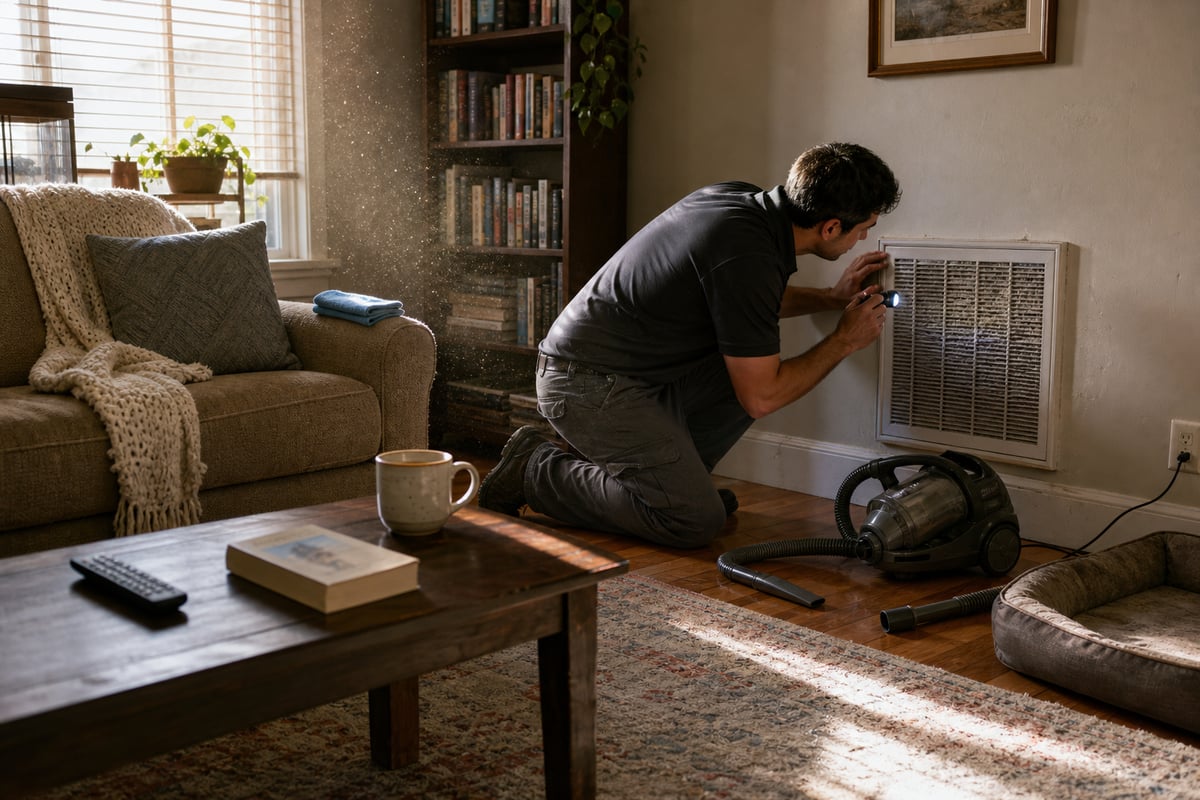
Air vents, returns, and filters collect dust and debris. When these components are dirty, HVAC systems can circulate contaminated air throughout the space. Professional cleaning includes wiping accessible vent covers, returns, and surrounding surfaces.
Some providers also remind clients to change HVAC filters on schedule. While deep air duct cleaning is a separate service performed by HVAC specialists, routine surface cleaning supports better airflow and reduces particle buildup near ventilation points.
Deep Cleaning of Soft Surfaces
Carpets, rugs, curtains, and upholstered furniture act as air filters by trapping particles. Over time, those particles become embedded. Vacuuming alone cannot remove all of them.
Periodic deep cleaning of carpets and upholstery removes trapped dust, pollen, and dander. In homes with pets or high foot traffic, this maintenance is especially important for indoor air quality.
Residential Indoor Air Quality Considerations
Homeowners and renters often notice indoor air quality problems through allergy symptoms, musty odors, or visible dust buildup. Professional cleaning helps by:
- Removing pet dander and hair from floors, furniture, and corners
- Cleaning under beds, behind appliances, and other overlooked areas
- Addressing bathroom and kitchen moisture that encourages mold
- Using non-toxic products safe for children and pets
- Maintaining a consistent schedule that prevents pollutant accumulation
Move-in and move-out cleaning also improves air quality by removing construction dust, previous occupants' residues, and allergens trapped in cabinets, closets, and window tracks. Interior window and blind cleaning removes dust and pollen that settle on horizontal surfaces.
For households with allergy sufferers, young children, older adults, or pets, recurring professional cleaning reduces the total allergen load in the home.
Commercial Indoor Air Quality Considerations
Workplace air quality affects employee health, attendance, and productivity. Facility managers and business owners must manage larger spaces, more occupants, and higher daily foot traffic.
Professional commercial cleaning supports indoor air quality by:
- Maintaining consistent cleaning schedules for high-use areas
- Using low-VOC, eco-friendly products that do not add chemical irritants
- Cleaning entry mats and floors where outdoor pollutants are tracked inside
- Wiping shared surfaces, electronics, and break rooms that accumulate dust and residue
- Informing facility staff about filter replacement and ventilation needs
In offices, retail locations, medical facilities, and multi-tenant buildings, poor air quality can lead to employee complaints and tenant dissatisfaction. A commercial cleaning provider with documented processes can help create a healthier environment and support a building's long-term condition.
Why Eco-Friendly Cleaning Products Matter
The choice of cleaning products directly affects indoor air quality. Traditional cleaners may contain ammonia, bleach, or synthetic fragrances that release VOCs. These chemicals can linger in the air and irritate respiratory systems.
Eco-friendly, non-toxic products clean effectively without introducing those pollutants. They are safer for cleaning technicians, building occupants, children, and pets. For clients who prioritize sustainability and health, green cleaning is a practical air quality improvement.
The Mopping Duck exclusively uses eco-friendly, non-toxic products in every residential and commercial cleaning service. This commitment supports healthier indoor air without sacrificing cleaning performance.
How The Mopping Duck Supports Healthier Air in San Diego
The Mopping Duck provides customized residential and commercial cleaning throughout San Diego. Every team member is fully vetted and insured, and every service follows a proprietary client-specific checklist.
Our approach to indoor air quality includes:
- Detailed dust and allergen removal from surfaces, floors, and soft furnishings
- Moisture-prone area cleaning to reduce mold risk
- Use of eco-friendly, non-toxic products only
- Consistent recurring schedules that prevent pollutant buildup
- Clear communication with clients about ventilation, filters, and problem areas
For recurring house cleaning, move-in and move-out deep cleaning, or scheduled facility maintenance, our team can help you maintain cleaner indoor air.
Explore residential cleaning services or learn about commercial cleaning programs. You can also request a customized cleaning quote based on your space and priorities.
Frequently Asked Questions
How does professional cleaning reduce indoor air pollutants?
Professional cleaning removes dust, pet dander, pollen, mold spores, and chemical residues from surfaces, carpets, upholstery, and ventilation points. Using HEPA-filtered vacuums and microfiber cloths captures particles instead of pushing them back into the air. Consistent cleaning prevents pollutants from accumulating and becoming airborne.
Do eco-friendly cleaning products really improve air quality?
Yes. Eco-friendly, non-toxic products clean effectively without adding volatile organic compounds or synthetic fragrances to indoor air. Traditional cleaners can leave chemical residues and odors that irritate respiratory systems. Choosing green products reduces chemical pollutant load and supports better air quality for occupants and cleaning staff.
How often should professional cleaning be scheduled for better air quality?
The ideal frequency depends on household size, pets, allergies, foot traffic, and building use. Many homes benefit from weekly or biweekly recurring cleaning. Commercial spaces with higher occupancy may need daily or multiple visits per week. A customized schedule prevents pollutant buildup instead of waiting for visible dust or odor problems.
Does professional cleaning include air duct cleaning?
Routine professional cleaning typically includes wiping accessible air vents, returns, and surrounding surfaces. However, deep cleaning inside air ducts is a separate service performed by HVAC specialists. Your cleaning provider can alert you to visible buildup and remind you to change HVAC filters on schedule.
Can professional cleaning replace an air purifier?
Professional cleaning reduces pollutant sources before they become airborne. For severe allergies or specific health concerns, an air purifier may provide additional filtration. Combining source removal through cleaning with proper ventilation can improve indoor air quality more effectively than either approach alone.
Final Recommendation
Indoor air quality improves when pollutant sources are controlled, surfaces are cleaned consistently, and low-toxicity products are used. Professional cleaning is a practical, ongoing solution for both homes and commercial buildings.
If you want healthier air in your San Diego home or facility, start with a customized cleaning plan. Request a quote to discuss your space, schedule, and air quality concerns, or contact The Mopping Duck for more information.