

Hard-Water Buildup in San Diego Bathrooms: Cleaning vs. Permanent Damage
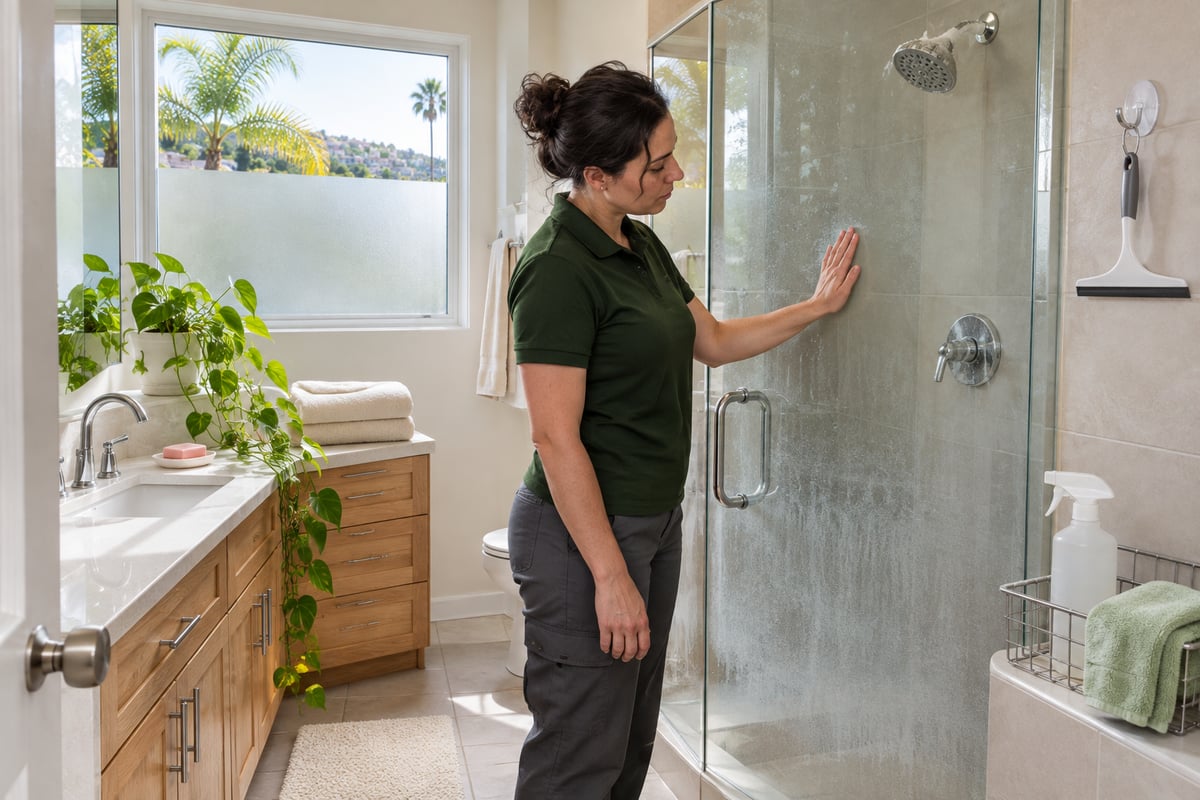
Hard-water buildup in San Diego bathrooms is usually removable if addressed early. However, when mineral deposits are left to layer and bond over months or years, they can cause permanent etching and surface damage that no cleaning product can reverse. Knowing the difference between removable scale and permanent damage helps you clean safely, avoid over-scrubbing, and decide when to call a professional.
Why San Diego Water Creates So Much Bathroom Buildup
San Diego’s municipal water supply is considered hard to very hard, often measuring 12 to 13 grains per gallon or more. The water picks up dissolved calcium and magnesium from the Colorado River and local sources. When hard water lands on a bathroom surface and evaporates, those minerals remain behind. At first, the residue is barely visible, but repeated evaporation creates layers of hard scale on faucets, shower glass, tile, and toilet bowls.
Hard water also interferes with soap. Soap reacts with calcium and magnesium to form a sticky film. That film combines with mineral deposits and body oils to create the stubborn haze and rings common in San Diego bathrooms. Left unchecked, the layers become thicker and more difficult to remove.
Removable Buildup vs. Permanent Etching
The most reliable way to tell whether you are dealing with removable buildup or permanent damage is by touch.
- Rough or bumpy texture means mineral deposits are sitting on top of the surface. That is removable scale.
- Smooth but cloudy or hazy often indicates etching. The surface itself has been worn away by prolonged mineral exposure. Cleaning cannot restore it.
This distinction matters because aggressive scrubbing on etched glass or damaged finishes only makes things worse. If the surface feels smooth but still looks cloudy, additional cleaning is unlikely to fix it. At that point, repair or replacement may be the only option.
Safe DIY Cleaning for Hard-Water Stains
For early-stage hard-water buildup, you can often remove deposits with patience and the right technique. The goal is to dissolve minerals, not force them off with abrasives.
Faucets and Metal Fixtures
- Soak a cloth or paper towel in white vinegar or lemon juice.
- Wrap the cloth around the fixture and let it sit for 30 to 60 minutes.
- Wipe away loosened scale and rinse thoroughly with water.
- Dry the fixture completely to prevent new spots.
Do not use vinegar on natural stone surfaces such as marble or travertine, because acid can etch the stone.
Shower Glass
- Spray a non-abrasive hard-water remover or a diluted vinegar solution onto the glass.
- Work in small sections using light to moderate pressure with a non-scratch sponge or microfiber cloth.
- Rinse thoroughly to remove all residue.
- Dry or squeegee the glass after every shower to slow new buildup.
Toilet Bowl Rings
- Turn off the water supply and flush to lower the water level.
- Apply a hard-water descaler or vinegar to the ring.
- Let it sit for at least 30 minutes.
- Scrub with a pumice stone or non-abrasive brush, then flush and rinse.
Do not use abrasive powders on porcelain, as they can create micro-scratches that trap future stains.
Tile and Grout
Hard water scale on tile can often be removed with a mild acid-based cleaner safe for the tile type. Grout may need a stiff brush, but avoid metal brushes that can gouge the grout lines. After cleaning, drying the area helps prevent mineral residue from re-forming.
When Buildup Becomes Permanent
Permanent damage occurs when minerals have chemically bonded to or etched into the surface. This often appears as:
- Cloudy shower glass that remains cloudy even after thorough cleaning and feels smooth.
- Dull spots on chrome or brushed nickel fixtures where the finish has worn away.
- White or yellowish scale that has hardened into a crust and cannot be dissolved.
- Grout that remains discolored after cleaning because the surface has been eroded.
In these cases, continued scrubbing will not help. Glass may need professional restoration or replacement, and severely damaged fixtures may need new finishes. The best way to avoid permanent damage is consistent maintenance.
Prevention Beats Deep Cleaning
The key to controlling hard water in San Diego bathrooms is not harder scrubbing. It is preventing mineral deposits from layering in the first place.
- Wipe faucets and sink basins dry after each use.
- Squeegee shower glass and walls after every shower.
- Keep a microfiber cloth handy for quick daily wipes.
- Address stains early before they become thick scale.
- Schedule light weekly cleaning of bathroom surfaces.
For many homeowners, a recurring professional cleaning service provides the consistency needed to keep hard-water buildup under control. Professional cleaners use appropriate products and techniques to remove early deposits without damaging surfaces.
How The Mopping Duck Helps San Diego Homeowners
The Mopping Duck provides residential cleaning services across San Diego and surrounding communities, including deep cleaning, recurring maintenance, and move-in/move-out cleaning. For bathrooms struggling with hard-water buildup, a professional deep cleaning is often the most effective way to address mineral deposits safely.
Our teams use eco-friendly cleaning products that are effective on scale while being safer for your home and family. Because we customize every cleaning plan, we can focus extra attention on bathrooms, shower glass, fixtures, and tile where hard-water deposits accumulate. By maintaining a consistent cleaning schedule, you reduce the chance that buildup will progress to permanent etching.
If you are noticing rough buildup on your faucets or haze on your shower glass, request a personalized cleaning quote to have a professional assess your bathroom and recommend the right service frequency. You can also learn more about our residential cleaning options.
Frequently Asked Questions
Is San Diego water hard?
Yes. San Diego’s water supply typically measures 12 to 13 grains per gallon or more, which is classified as hard to very hard. The high mineral content comes largely from the Colorado River and leads to scale buildup on bathroom surfaces, fixtures, and appliances.
Can vinegar remove all hard water stains?
Vinegar is effective on fresh mineral deposits and light scale. It works by dissolving calcium and magnesium. However, thick layered buildup or permanent etching will not respond to vinegar. Vinegar should also be avoided on natural stone surfaces because it can cause etching.
How do I know if hard water damage is permanent?
Feel the surface. If it feels rough or bumpy, the mineral deposit is on top and can be cleaned. If it feels smooth but still looks cloudy or hazy, the surface itself is likely etched. Cleaning cannot reverse etching; repair or replacement may be needed.
Does The Mopping Duck clean hard water stains?
Yes. The Mopping Duck’s residential cleaning services, especially deep cleaning, include detailed attention to bathroom surfaces where hard water deposits form. Our team uses eco-friendly products and customized checklists to address buildup safely. Contact us for a personalized quote based on your bathroom’s condition.
How often should I clean to prevent hard water buildup?
Light weekly cleaning is recommended for San Diego bathrooms. Wiping down faucets, squeegeeing shower glass, and removing fresh spots before they layer will prevent heavy scale. For many households, a recurring professional cleaning every week or every two weeks provides consistent prevention and keeps bathrooms looking their best.
Take Control of Hard-Water Buildup Before It Causes Permanent Damage
Hard water in San Diego is a constant challenge, but it does not have to lead to ruined fixtures or permanently etched glass. By understanding the difference between removable scale and permanent etching, you can clean safely and know when to stop scrubbing. For the best long-term results, combine daily maintenance with professional cleaning.
The Mopping Duck offers customized residential cleaning services throughout San Diego County, including deep cleaning and recurring maintenance designed to keep hard-water buildup under control. Request a quote today and let our vetted, insured team help you protect your bathroom surfaces from permanent damage.