

Eco-Friendly Cleaning for Kitchens: Best Practices
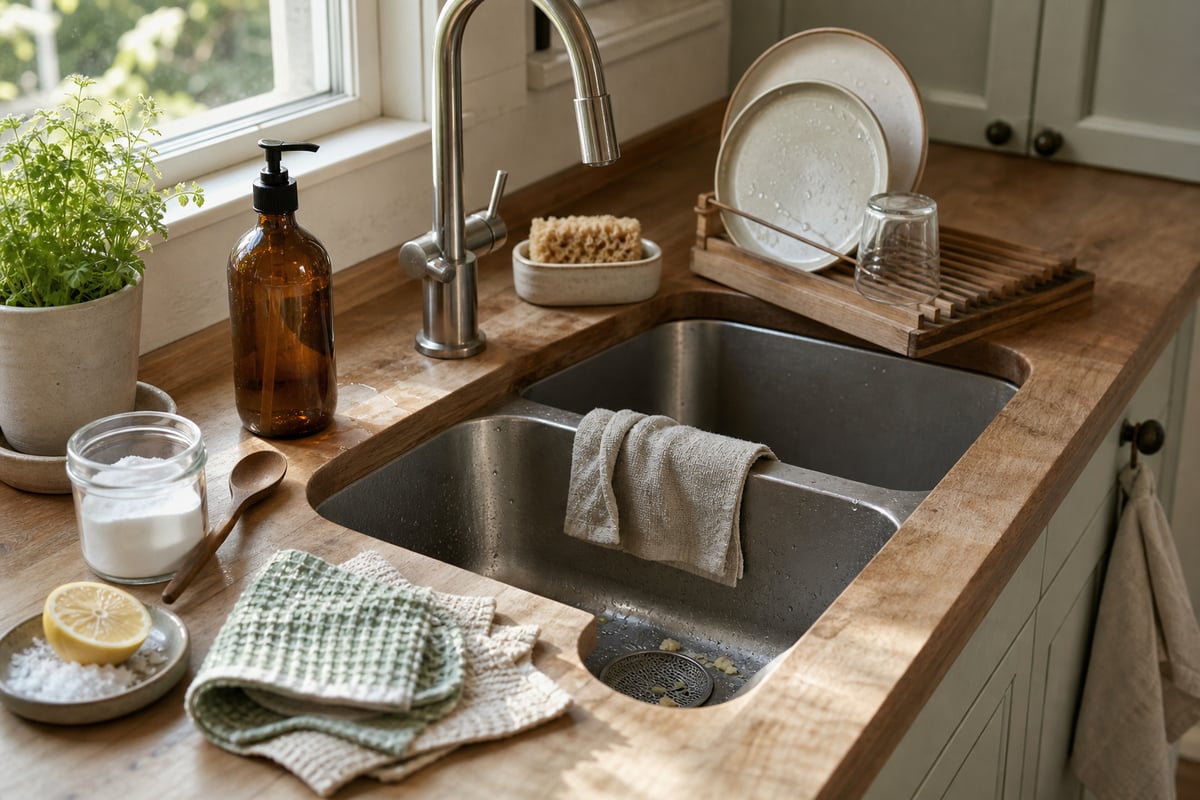
Eco-friendly kitchen cleaning works best when you combine non-toxic cleaning agents, correct hygiene techniques, and reusable tools. For homes, the priority is food-contact surface safety and daily maintenance. For commercial kitchens, the same principles apply, but they must also support food safety compliance, water efficiency, and staff training.
Why Eco-Friendly Kitchen Cleaning Matters
Eco-friendly kitchen cleaning reduces chemical residues on food preparation surfaces, improves indoor air quality, and limits single-use plastic waste. It is especially important in kitchens where children, pets, or employees spend time near food and cleaning supplies. In San Diego, using non-toxic products also supports broader environmental goals.
The Mopping Duck uses exclusively eco-friendly, non-toxic products for its kitchen cleaning. That removes the guesswork for clients who want a deep clean without introducing harsh chemicals into their home or facility.
Core Principles for Any Kitchen
These practices apply to both residential and commercial kitchens:
- Clean surfaces with hot water and soap after handling raw meat, fish, or eggs. Soap lifts grease and proteins that microbes cling to; water alone mostly moves them around.
- Choose plant-based or biodegradable cleaners with clear ingredient lists. Look for products designed for the specific surface and task.
- Replace single-use paper towels with washable cloths where food safety allows. Keep separate cloths for food-contact surfaces and floors.
- Ventilate during and after cleaning. Open windows or run exhaust fans to reduce moisture and improve air quality.
- Clean as you go. A quick wipe before cooking removes dust, but the important clean happens after raw ingredients are prepared.
- Use the dishwasher as a hygiene tool. Its combination of hot water, detergent, and sustained rinsing reduces microbes more effectively than hand washing alone for most items.
Eco-Friendly Cleaning for Residential Kitchens
Daily Countertop and Sink Hygiene
For most everyday kitchen cleaning, plant-based dish soap and hot water are the most important tools. After preparing raw meat, fish, or eggs, wash the area with hot water and dish soap using a clean cloth or disposable paper. Rinse with clean water and allow the surface to air dry.
The sink and drain need just as much attention. Food scraps around the drain provide moisture and nutrients for microbes. Periodically pour hot water down the drain to move residues away. For stain and odor control, scrub with coarse salt and half a lemon. This method lifts stains and reduces odors, but it is a finishing step, not a substitute for soap and proper scrubbing.
Sponges, Cloths, and Reusable Tools
A sponge should be rinsed thoroughly in hot water after each use, squeezed firmly, and stored upright where air can circulate. Leaving it in the sink or on a solid tray keeps the underside damp and allows microbes to persist. Unlike cloths, sponges cannot be effectively laundered because residues remain inside their structure. Replace kitchen sponges every one to two weeks, or sooner if they smell.
Reusable cloths and Swedish dishcloths are better long-term options. Rinse them after each use and launder them regularly. If cloths develop odors, boiling them in water with baking soda and then white vinegar can freshen them before a normal wash cycle. For small spills, a Swedish dishcloth with a light spritz of plant-based all-purpose cleaner works well. Place the cloth on the top rack of the dishwasher between uses.
Dishwasher Best Practices
Scrape plates instead of pre-washing them. Modern detergents are designed to break down food residues during the cycle, and heavy pre-rinsing can reduce their effectiveness. Load plates facing inward, leave space between items so water can circulate, and separate utensils so water reaches all surfaces.
Plant-based dishwasher sheets or powders can reduce plastic packaging. Run the dishwasher only when full to save water and energy.
Natural Ingredients and Their Limits
Simple pantry ingredients have useful roles, but they are not interchangeable with soap or disinfectants.
- Dish soap is a surfactant. It breaks down grease and lifts food residues so they can be rinsed away. This is the most important step for most kitchen cleaning.
- Vinegar or lemon juice dissolve mineral deposits and help remove odors. They work well for mineral deposits around faucets or kettles, but they are not reliable disinfectants on their own.
- Baking soda is a gentle abrasive. It helps scrub away stuck-on material without scratching surfaces and can neutralize some smells.
- Salt provides friction for scrubbing cutting boards or stained areas.
Use these ingredients for specific tasks, not as replacements for proper cleaning.
Refrigerator, Oven, and Cabinet Care
When cleaning the refrigerator, remove shelves and wash them in the sink with dish soap and a reusable scrubber. Spray non-removable surfaces with plant-based all-purpose cleaner and wipe with a reusable cloth. For baked-on casserole dishes, sprinkle a little baking soda before scrubbing.
Ovens and cabinets often need targeted attention. A baking soda paste can lift grease and baked-on residue, but deeper jobs may require professional equipment. Residential kitchen cleaning can include oven, fridge, and cabinet add-ons without introducing harsh chemicals.
Eco-Friendly Cleaning for Commercial Kitchens
Commercial kitchens apply the same core principles, but they must also meet food safety standards, manage staff workflows, and document cleaning procedures.
Use Non-Toxic Cleaning Products
Choose plant-based, biodegradable cleaners with clear safety data sheets. Products should be effective against grease and food soils while being safe for food-contact surfaces when used according to instructions. Avoid cleaners with unnecessary dyes, fragrances, or aerosol propellants.
Optimize Water Usage
Train staff to scrape food scraps before washing, fill sinks rather than running water continuously, and use low-flow spray nozzles where possible. Run dish machines only when full, but never reduce required sanitizing temperatures or rinse cycles below local health code requirements.
Implement Proper Waste Management
Separate compost, recycling, and trash at each work station. Keep grease and oil out of drains. Clear drain screens regularly to prevent buildup and odors. Proper waste management reduces water treatment burden and keeps the kitchen safer.
Use Energy-Efficient Cleaning Techniques
Ventilation is a cleaning tool. Run exhaust fans during and after cleaning to remove moisture and airborne particles. Use energy-efficient dish machines and refrigeration coils, but confirm that any changes still meet commercial sanitation standards.
Train Staff and Document Work
Color-coded cloths prevent cross-contamination between raw food areas, finished food zones, and floors. Written cleaning schedules and checklists help maintain consistency. Commercial kitchens benefit from third-party support that documents completed tasks and follows a reliable schedule. Commercial kitchen maintenance from The Mopping Duck includes scheduled facility care with exclusively eco-friendly, non-toxic products.
How a Professional Eco-Friendly Cleaning Service Helps
A professional service removes the guesswork from product selection, technique, and consistency. The Mopping Duck uses exclusively eco-friendly, non-toxic products and assigns vetted, insured team members. Client-specific checklists ensure that recurring cleanings meet the same standard every visit.
For households, the team can handle weekly, biweekly, or monthly kitchen maintenance, plus one-time deep cleans. For commercial clients, scheduled facility maintenance supports staff workflows and reduces the burden on internal teams. The company maintains a 5.0-star average rating across more than 100 reviews, reflecting consistent quality and client trust.
Common Eco-Friendly Kitchen Cleaning Mistakes
- Assuming vinegar or lemon juice disinfects. These mild acids remove mineral deposits and odors, but they do not reliably kill pathogens on their own.
- Using too many products. A few well-chosen, plant-based cleaners are usually more effective and easier to manage than a large collection of specialized sprays.
- Keeping sponges too long. Replace sponges every one to two weeks, and never leave them wet in the sink.
- Pre-rinsing dishes too heavily. Scrape plates and load the dishwasher correctly instead of washing them by hand first.
- Letting cloths sit damp. Rinse and air dry reusable cloths after every use, and launder them regularly.
- Relying on green claims without checking documentation in commercial kitchens. Verify products and procedures against food safety requirements.
Frequently Asked Questions
What is the most eco-friendly way to clean kitchen counters?
Use hot water and a plant-based dish soap, wipe with a clean reusable cloth, rinse with clean water, and let the surface air dry. This removes grease and food residues without leaving chemical residue.
Can vinegar and baking soda replace kitchen disinfectants?
No. Vinegar dissolves mineral deposits and reduces odors, while baking soda is a gentle abrasive. Neither is a reliable disinfectant on its own. Use them for specific tasks such as mineral deposit removal or scrubbing, but clean food-contact surfaces with soap and hot water.
How often should I replace kitchen sponges?
Replace kitchen sponges every one to two weeks, or sooner if they smell. Sponges hold moisture and food particles, and they cannot be effectively laundered. Rinse and squeeze them dry after each use and store them upright.
Are eco-friendly cleaning products effective in commercial kitchens?
Yes. Plant-based, biodegradable cleaners can be effective when they are selected for the correct task and paired with proper procedures, staff training, and quality control. Commercial kitchens should verify that products meet food safety and sanitation requirements.
Is a dishwasher more hygienic than hand washing?
For most items, yes. A dishwasher combines hot water, detergent, and sustained rinsing to reduce microbes more effectively than hand washing alone. Scrape plates instead of pre-rinsing, and load items so water can circulate.
What does a professional eco-friendly kitchen cleaning include?
It typically includes non-toxic degreasing, cleaning of food-contact surfaces, appliance interiors or exteriors, cabinet faces, and sink and drain care. The Mopping Duck customizes checklists for each client and offers residential and commercial kitchen cleaning services.
Start With a Safer, Cleaner Kitchen
Eco-friendly kitchen cleaning is not about using more products or relying on single natural ingredients. It is about combining the right non-toxic products with consistent hygiene habits and water- and waste-conscious routines. For San Diego homes and commercial kitchens, The Mopping Duck provides exclusively eco-friendly, non-toxic cleaning with vetted, insured teams and client-specific checklists.
Request a customized cleaning quote or contact us to schedule a kitchen-focused cleaning that matches your home or facility.